Showing posts with label Legislation. Show all posts

Wednesday, February 17, 2016

PubMed Update November 2015 - January 2016

We have 35 articles for your viewing this time, with apologies for the delay in getting this out. Thanks to Traci Green for offering to help out and for reviewing this post.


Becker WC, Merlin JS, Manhapra A, Edens EL.
Addict Sci Clin Pract. 2016 Jan 28;11(1):3. doi: 10.1186/s13722-016-0050-0.
Comment: Fascinating article. Worth a read if you’re interested in management of pain and opioids.

Harocopos A, Allen B, Paone D.
Int J Drug Policy. 2015 Dec 29. pii: S0955-3959(15)00374-6. doi: 10.1016/j.drugpo.2015.12.021. [Epub ahead of print]
Comment: Great to see some of the path from prescription opioids to heroin. Makes sense that first step is moving from a drug co-formulated with acetaminophen.

Samuels EA, Dwyer K, Mello MJ, Baird J, Kellogg A, Bernstein E.
Acad Emerg Med. 2016 Jan 27. doi: 10.1111/acem.12910. [Epub ahead of print]
Comment: To get EDs to enhance practices will require pressure from the top.

4) Internal Medicine Resident Knowledge, Attitudes and Barriers to Naloxone Prescription in Hospital and Clinic Settings.
Wilson JD, Spicyn N, Matson P, Alvanzo A, Feldman L.
Subst Abus. 2016 Jan 28:0. [Epub ahead of print]
Comment: Nice article from Baltimore finding that young physicians are ready and willing to prescribe naloxone, but aren’t routinely doing so yet.

Sunday, August 5, 2012

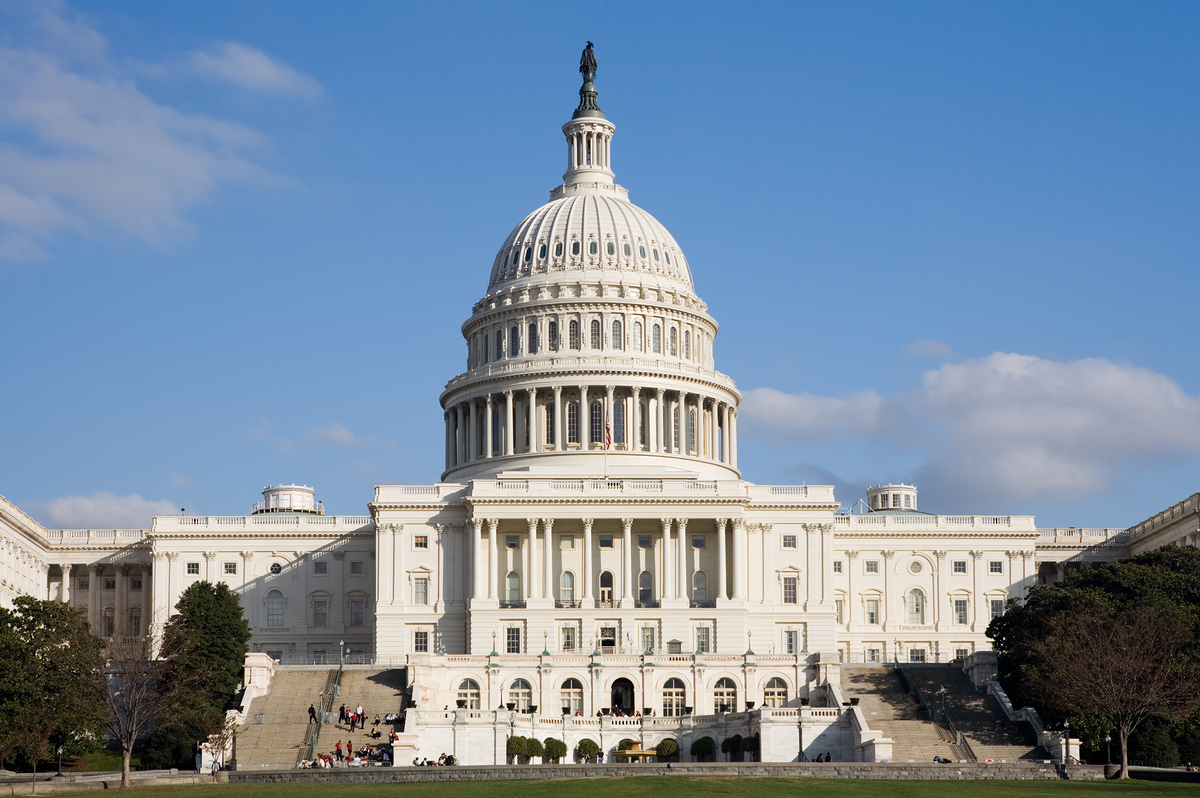
Overdose Prevention Legislation Introduced in U.S. House of Representatives

On August 2, Maryland Democratic Congresswoman Donna Edwards introduced the "Stop Overdose Stat (SOS) Act" to the U.S. House with bipartisan cosponsorship. The bill is an expanded version of legislation that Edwards introduced but failed to pass in 2009. With any luck the increased attention to overdose at the federal level and greater bipartisan involvement in the drafting of the current bill (particularly with leadership from California Republican Mary Bono Mack) will get it the consideration it deserves.


The full text of the bill is available on GovTrack here. In its current form the bill would establish four important things at the federal level:

  • A grant program, to be administered by the Centers for Disease Control and Prevention (CDC), supporting overdose prevention work including naloxone distribution. Government public health agencies and community-based organizations would be eligible. 
  • An overdose surveillance system whereby CDC would aggregate and analyze overdose data from local, state and federal government agencies and private sources. Such data could potentially fill gaps in information and provide a consistent way of spotting national trends that can help direct resources and programming. Crucially, the bill would also direct CDC to provide surveillance technical assistance to local and state agencies, which could spur more detailed and accurate reporting.
  • Development of a national plan to reduce overdose mortality, to be submitted to Congress by the Secretary for Health and Human Services no later than 180 days after the law is enacted. 
  • New or expanded research grants on overdose through the National Institute on Drug Abuse (NIDA), which would include a review of current research funding and grants to evaluate existing or trial interventions.

The Drug Policy Alliance has a few more details in their press release. All in all, the bill is an exciting development and just the fact of its existence helps keep momentum going in the right direction with the Feds. OPA encourages American readers to thank their congressional representative if they co-sponsored the bill (there's a list here), and others to call their rep and encourage them to support it.